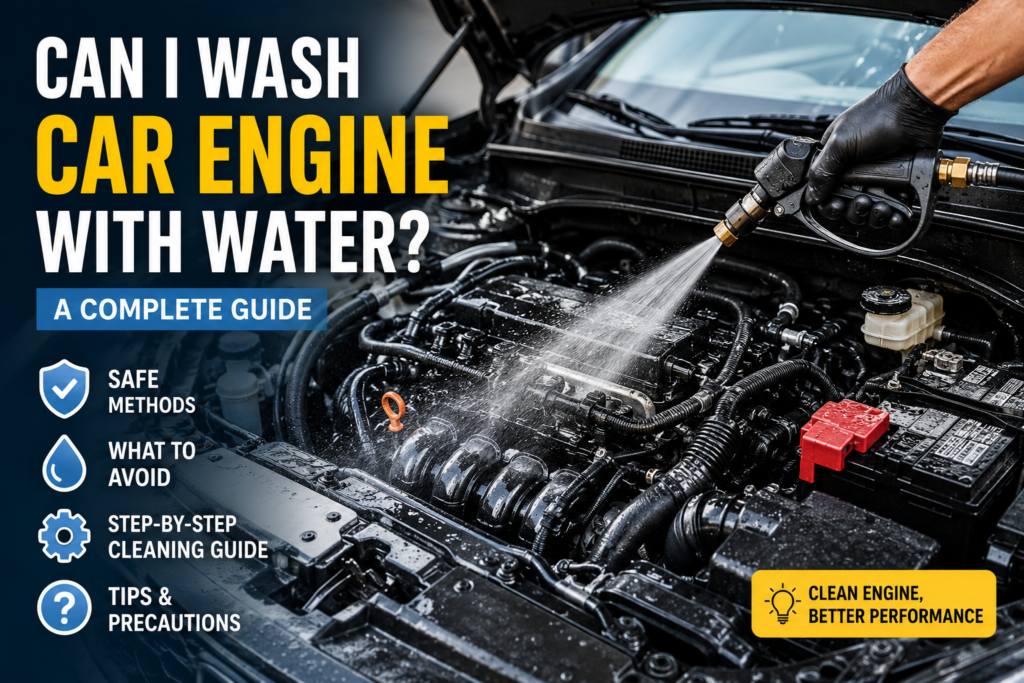
Yes, you can wash a car engine with water, but how you use the water matters. An engine bay contains electrical connections, sensors, wiring, air-intake components, and other parts that should not be exposed to excessive moisture or high-pressure water.
A careful engine-bay cleaning can remove dust, oil residue, grease, and road grime without causing unnecessary problems. The safest approach is to work with a cool engine, controlled water flow, suitable cleaning products, and thorough drying.
In this guide, you’ll learn how to wash a car engine safely, which areas require extra care, and when professional engine cleaning may be the better option.
Can You Wash a Car Engine With Water?
Yes, but you should avoid treating the engine bay like the exterior of your car.
The engine compartment is designed to operate in an environment where some moisture may be present. However, that doesn’t mean every component should be soaked with a hose or pressure washer. Direct, forceful water can reach electrical connectors, sensitive components, or openings where moisture may cause temporary or long-term issues.
For routine cleaning, use a controlled amount of water rather than flooding the entire engine bay. Removing loose dirt first also reduces the amount of water and cleaning solution needed.
The goal is to clean the engine bay without unnecessarily forcing water into sensitive areas.
Is It Safe to Spray Water on a Car Engine?
Lightly rinsing an engine bay can be safe when done correctly, but uncontrolled spraying is not recommended.
Several components deserve particular attention:
- Electrical connectors and wiring
- Alternator
- Fuse and relay boxes
- Air intake and filter housing
- Sensors and exposed electronic components
- Areas with damaged or missing protective covers
A gentle stream of water is considerably easier to control than a pressure washer. If you’re unsure about the condition of your vehicle or its components, professional engine-bay cleaning can reduce the risk of accidental damage.
Which Engine Components Should You Keep Dry?
You don’t necessarily need to keep every part of the engine completely dry, but sensitive components should not be deliberately saturated.
Alternator
The alternator contains electrical components and should not be subjected to a concentrated, high-pressure stream of water.
Fuse and Relay Boxes
These housings protect important electrical circuits. Avoid directing water into gaps, openings, or poorly sealed areas.
Air Intake
Water entering the air-intake system can create serious problems. Never intentionally spray water into an exposed intake or air filter.
Electrical Connectors and Wiring
Modern vehicles use numerous electronic sensors and connectors. Avoid blasting these areas with water, particularly at high pressure.
Damaged or Exposed Components
If you notice cracked covers, loose wiring, damaged connectors, or missing protective pieces, don’t assume that water cleaning is safe. Address the underlying issue first.
How to Wash a Car Engine With Water Safely
A careful process can make engine-bay cleaning much safer.
1. Allow the Engine to Cool
Never begin by spraying a hot engine with cold water.
Allow the vehicle to cool down naturally before cleaning. Sudden temperature changes are unnecessary, and working around a hot engine also increases the risk of burns.
2. Remove Loose Dirt
Use a soft brush or cloth to remove loose dust, leaves, sand, and other debris.
This step is important because it prevents loose contamination from turning into muddy residue when water is introduced.
3. Protect Sensitive Areas
Before applying cleaner or water, identify components that should receive minimal moisture.
Depending on the vehicle, this may include the air intake, exposed electrical components, and other sensitive areas. The exact locations vary between vehicles, so consult the vehicle manufacturer’s guidance when available.
4. Apply an Engine-Safe Cleaner
For oily or greasy areas, use a cleaner designed for engine bays or automotive components.
Apply it according to the product instructions and allow it enough time to loosen dirt. Avoid using harsh household chemicals simply because they are available.
5. Rinse With Low Water Pressure
Use a gentle stream rather than a pressure washer at close range.
Work methodically and avoid directing water into electrical connections, openings, or the air intake. You don’t need large quantities of water to clean an engine bay effectively.
6. Use a Soft Brush for Stubborn Dirt
A soft detailing brush can help remove grime from difficult areas.
Work carefully around hoses, wiring, connectors, and plastic components. The objective is to loosen contamination without damaging the surrounding parts.
7. Dry the Engine Bay Thoroughly
Drying is an important part of the process.
Use clean microfiber towels to remove accessible moisture. A suitable air blower can also help move water away from crevices and connectors.
Give the engine bay additional time to air-dry before driving if substantial moisture remains.
8. Inspect Everything Before Driving
Once cleaning is complete, check that protective coverings have been removed, nothing has been left loose, and no cleaning materials remain inside the engine compartment.
If the vehicle develops unusual warning lights, rough running, starting problems, or other symptoms after cleaning, stop using it until the cause has been checked.
Can You Use a Pressure Washer on a Car Engine?
Using a pressure washer around an engine requires much more caution than washing the exterior of a vehicle.
High-pressure water can force moisture into places that a gentle rinse would not reach. Getting too close to electrical connectors, seals, sensors, or openings can therefore increase the risk of problems.
For most DIY engine cleaning, low-pressure water is the safer choice.
Professional detailers may use specialized equipment and techniques for engine-bay cleaning, but professional cleaning does not mean every component should be directly pressure-washed.
If you don’t know which parts of your particular vehicle are sensitive, avoiding high-pressure engine cleaning is the sensible option.
What Should You Use to Clean a Car Engine?
You don’t need a complicated collection of equipment.
Useful items include:
- Engine-safe degreaser
- Soft detailing brushes
- Microfiber towels
- Low-pressure water source
- Protective covers where appropriate
- Air blower or compressed air for drying
Choose products intended for automotive use and follow their instructions. Avoid experimenting with aggressive chemicals that may damage plastics, rubber, painted surfaces, or protective coatings.
How Often Should You Clean Your Car Engine?
There is no universal schedule for engine-bay cleaning.
A vehicle driven regularly on dusty or muddy roads may need cleaning more often than one that is primarily driven in clean, dry conditions. Oil leaks, accumulated grease, leaves, and heavy dirt are also reasons to inspect the engine bay.
For many vehicles, occasional cleaning is sufficient.
More importantly, engine-bay cleaning should not replace regular inspection. Excessive oil or fluid buildup can sometimes indicate a mechanical problem that needs attention rather than simply being washed away.
What Happens If Water Gets Into the Engine?
There is an important difference between water getting into the engine bay and water entering the engine’s air intake or internal combustion area.
A small amount of moisture around the engine compartment is not automatically a sign of damage. The concern increases when water is forced into sensitive electrical components or enters the air-intake system.
If water has entered an intake, the vehicle should not simply be started without determining whether the engine could be affected.
Likewise, if the car develops warning lights, misfires, difficulty starting, or unusual behavior after engine cleaning, have it inspected rather than repeatedly attempting to start it.
Can You Wash a Car Engine With a Garden Hose?
A garden hose can be used more safely than a high-pressure washer when the water flow is controlled.
Keep the nozzle at a reasonable distance, avoid concentrated streams, and never deliberately spray sensitive electrical components or the air intake.
The amount of water matters less than where and how forcefully it is applied.
Should You Wash a Hot or Cold Engine?
It’s best to clean the engine when it is cool.
A cool engine is safer to work around and avoids unnecessary thermal shock from putting cold water onto very hot components.
If you’ve just driven the car, park it in a safe location and allow sufficient time for the engine bay to cool before beginning the cleaning process.
Can You Use Dish Soap to Clean a Car Engine?
It is better to use a product specifically formulated for automotive or engine-bay cleaning.
Dish soap is designed primarily for household cleaning and grease removal. Engine compartments contain a mixture of metals, plastics, rubber, coatings, and electrical components, so an appropriate automotive cleaner is generally a better choice.
Always follow the cleaner’s instructions and avoid allowing concentrated chemicals to remain on surfaces.
Should You Clean Your Car Engine Yourself or Hire a Professional?
DIY cleaning can work well when the engine bay is only lightly dirty and you understand which components require protection.
Professional cleaning may be preferable when:
- The engine bay has heavy grease buildup
- There is significant oil or fluid residue
- You are unfamiliar with the vehicle’s components
- You want a detailed finish
- You don’t have appropriate cleaning equipment
- You are concerned about damaging electrical components
A professional car-care service can assess the engine bay before cleaning and use controlled methods to remove accumulated dirt.
Frequently Asked Questions
Can I wash my car engine with water?
Yes. Water can be used for engine-bay cleaning when applied carefully. Avoid high-pressure spraying and protect sensitive components.
Can I use a pressure washer on my engine?
It is generally better to avoid close-range, high-pressure spraying around sensitive engine components. A controlled, low-pressure rinse is a safer option for most DIY cleaning.
Can water damage car engine electronics?
Excessive or high-pressure water can cause problems if it reaches sensitive electrical components, connectors, or openings. That’s why careful application and thorough drying are important.
How do I dry my engine after washing it?
Use microfiber towels to remove accessible moisture and an appropriate air blower to help clear water from crevices. Allow the engine bay to dry before normal driving if significant moisture remains.
Is engine cleaning necessary?
Engine-bay cleaning is not required as frequently as exterior car washing. However, removing excessive dirt, grease, and debris can improve the appearance of the engine compartment and make leaks or other issues easier to identify.
Can I wash my engine if it has an oil leak?
You can clean the engine bay, but cleaning should not hide the underlying problem. If you notice fresh oil buildup, identify and repair the source of the leak rather than simply washing it away.
Final Verdict: Can I Wash My Car Engine With Water?
Yes, you can wash a car engine with water, but you should do it carefully.
Start with a cool engine, remove loose dirt, protect sensitive areas, use an appropriate cleaner, rinse with controlled water pressure, and dry the engine bay thoroughly.
The biggest mistake is treating the engine like the outside of the car and spraying everything with a high-pressure washer. A more controlled approach reduces unnecessary risk and can still leave the engine bay clean and presentable.
If you’re unsure about cleaning your engine yourself, professional engine-bay cleaning is a safer alternative. For quality car cleaning and detailing services, ArabCarWash.com can help keep your vehicle clean inside, outside, and under the hood.