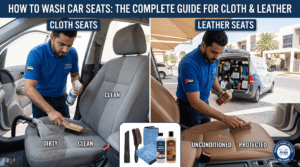
Your car seats endure heavy everyday wear, from spilled morning coffee and food crumbs to fine desert sand, sweat, and road grime. Over time, fabric upholstery traps odors and stains, while leather seats lose their natural moisture, turning stiff and prone to cracking under high cabin temperatures.
Washing your car seats restores your cabin’s fresh look, eliminates lingering odors, and protects your vehicle’s resale value. Whether you have cloth or leather upholstery, this comprehensive guide walks you through cleaning your seats effectively without causing water damage or material degradation.
Essential Supplies & Pre-Cleaning Preparation
Before applying any cleaning solution, gather the right tools and prepare the cabin.
Tools & Products Needed
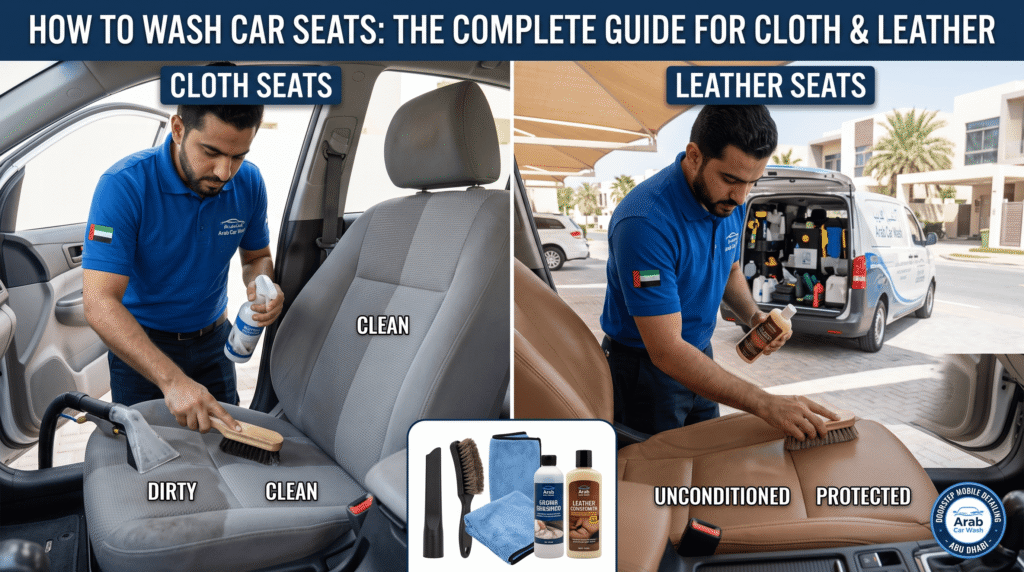
Vacuum Cleaner: Fitted with a crevice tool and soft brush attachment.
Cleaning Brushes: Soft horsehair brush (for leather) or medium-stiff upholstery brush (for cloth).
Dedicated Cleaner: pH-neutral interior cleaner or fabric shampoo (avoid generic household soaps).
Microfiber Towels: 4–6 clean, lint-free towels.
Leather Conditioner: (For leather interiors only) with built-in UV blockers.
Spray Bottle & Warm Water: For light dilution and damp-wiping.
Step 1: Deep Vacuuming & Debris Removal
Never spray liquid cleaner onto dry dirt or loose sand—doing so turns dust into abrasive mud that works deeper into the weave or leather grain.
Recline the seats fully to expose hidden crevices.
Use the crevice attachment to clear debris lodged along seams and seat buckles.
Vacuum the entire cushion using overlapping passes.
How to Clean Fabric & Cloth Car Seats
Cloth seats are porous, meaning the primary risk is over-saturation. Wet foam cushions beneath the fabric take days to dry and can develop mildew or unpleasant odors.
  [ Deep Vacuum Seams ]
           ↓
  [ Light Mist of Fabric Cleaner ]
           ↓
  [ Circular Agitation with Brush ]
           ↓
  [ Microfiber Blotting & Extraction ]
           ↓
  [ Full Air Dry ]
1. Apply Cleaner Evenly
Lightly mist your upholstery shampoo over one section at a time (e.g., the bottom cushion first). Do not soak the surface; a light, even spray or foam application is sufficient.
2. Agitate the Fibers
Using a medium-soft brush, work the cleaner in small circular motions. This lifts embedded sand, body oils, and stubborn dirt to the surface.
3. Blot and Extract Grime
Immediately press a clean, dry microfiber towel firmly into the fabric to absorb the lifted moisture and dirt. Turn the towel frequently to work with a clean side. If you have access to a wet-dry vacuum or upholstery extractor, run it over the seat to pull out remaining moisture.
4. Dry Thoroughly
Keep the car doors open in a shaded, ventilated area for 1 to 2 hours until the fabric is completely dry to the touch.
How to Clean and Condition Leather Car Seats
Leather requires gentle handling and regular hydration to withstand dry cabin heat and intense sunlight.
| Step | Action | Best Practice |
| 1. Clean | Apply pH-neutral leather cleaner to a horsehair brush or towel. | Never spray directly into perforated cooling holes; scrub gently in small circles. |
| 2. Wipe | Remove lifted grease and residue with a damp microfiber cloth. | Dry immediately with a fresh, dry microfiber towel. |
| 3. Condition | Work a small coin-sized amount of leather conditioner across the seat. | Let it absorb for 10–15 minutes, then buff off excess to prevent sticky residue. |
How to Remove Tough Stains
For stubborn spots that regular shampooing does not lift, use these targeted treatments:
Coffee & Soda Stains: Mix equal parts warm water and white vinegar with a drop of dish soap. Dab the area with a microfiber towel (do not rub harshly) and blot dry.
Grease & Food Oil: Dust the spot with cornstarch or baking soda, leave it for 20 minutes to absorb the oil, then vacuum and clean with fabric shampoo.
Water Rings & Sweat Lines: Lightly dampen the entire seat section with distilled water to level out water rings, then extract thoroughly with a dry towel.
Top Mistakes to Avoid
Soaking the Cushion: Excess water seeping into seat foam leads to mould growth and rusty seat track mechanisms.
Using Bleach or Harsh Detergents: Laundry powders and household bleach strip leather coatings and cause discolouration in fabric.
Skipping Conditioner on Leather: Cleaning strips surface grime, but without conditioner, leather dries out and develops spiderweb cracks over time.
Frequently Asked Questions
How long do car seats take to dry after washing?
Cloth seats typically take 1 to 3 hours to air dry if not over-saturated. Using a wet extraction machine or parking in a well-ventilated, shaded breeze speeds up the process significantly.
Can I use washing powder or dish soap?
Dish soaps and laundry detergents contain harsh surfactants designed for hard surfaces and clothing. They leave sticky soapy residues in car seat fibers that attract fresh dirt even faster. Always use dedicated automotive interior cleaners.
How often should car seats be deep cleaned?
A routine vacuum every 1 to 2 weeks paired with a thorough deep cleaning and leather conditioning every 1 to 3 months keeps seats looking new and smelling fresh.
Need a Professional Deep Interior Clean at Your Doorstep?
If your seats have deep stains, embedded sand, or require full extraction and steam sanitization, skip the hassle and equipment rental.
Arab Car Wash brings complete mobile detailing and interior restoration directly to your home or office in Abu Dhabi:
Silver & Gold Care: Deep interior shampooing, high-suction extraction, and antibacterial sanitization.
Platinum Care: Full interior restoration, leather nourishment, and steam sanitization.
📞 Call / WhatsApp: +971 54 759 9215
🌐 Book Your Slot: arabcarwash.com